Chronic Kidney Disease
Quick read: CKD care is risk-based — combine eGFR category, albuminuria category, trajectory and comorbidity burden to decide follow-up intensity and intervention.
When to act now
eGFR <20 and declining → start dialysis modality education and vascular access referral. eGFR <30 + UACR >300 → nephrology within 4 weeks. Rapid decline (>5 mL/min/year) at any eGFR → urgent review.
Clinical pearl
SGLT2 inhibitors slow CKD progression independent of diabetes and are now recommended for all patients with CKD + UACR >200 mg/g when eGFR ≥20 mL/min/1.73m². Check formulary and reimbursement criteria.
Practical orientation: The KDIGO heatmap combines G (eGFR) and A (albuminuria) categories into a colour-coded risk grid. Green = low risk; yellow = moderately increased; orange = high; red = very high.
Use first: clinical summary and risk grid.
Then: cause classification and treatment table.
Escalate: complications and nephrology referral thresholds.
Clinical summary
Definition
Kidney damage or eGFR <60 mL/min/1.73 m² for ≥3 months, regardless of cause.
Damage markers
UACR >30 mg/g, active sediment, renal transplant, biopsy abnormalities or imaging abnormalities.
Staging
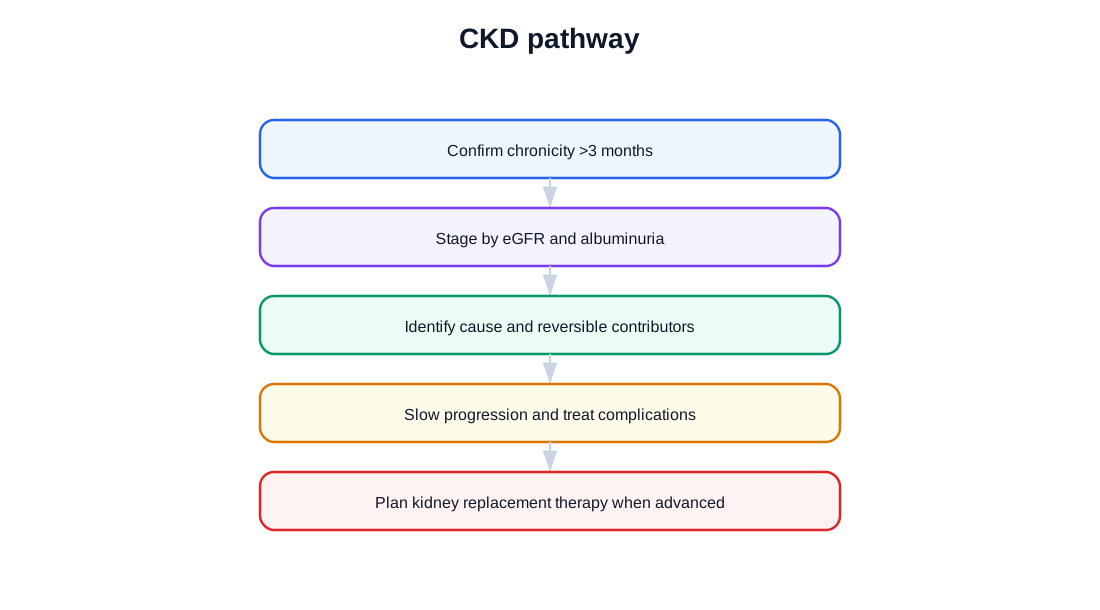
Combine G category (eGFR) with A category (albuminuria) using the KDIGO heatmap.
High-risk features
G3b–G5 and/or A3 albuminuria merit close follow-up and nephrology input.
Goals
Identify cause, slow progression, reduce cardiovascular risk, treat complications.
Algorithm
eGFR categories
| G category | eGFR (mL/min/1.73 m²) | Description |
|---|---|---|
| G1 | ≥90 | Normal or high — kidney damage required for CKD diagnosis |
| G2 | 60–89 | Mildly decreased |
| G3a | 45–59 | Mild to moderately decreased |
| G3b | 30–44 | Moderately to severely decreased |
| G4 | 15–29 | Severely decreased |
| G5 | <15 | Kidney failure |
Cause classification
| Category | Causes | Urinalysis / imaging clues |
|---|---|---|
| Pre-renal / haemodynamic | Chronic CCF, cirrhosis | Minimal protein, bland sediment |
| Vascular | Hypertension, renovascular disease, TMA | Minimal protein; small kidneys if chronic |
| Glomerular | Diabetic kidney disease, chronic GN | Proteinuria ± RBCs |
| Tubulointerstitial | Cystic kidney disease, CAKUT, infiltrative disease, chronic TIN | Protein usually <2 g/day ± WBCs; cysts or enlarged kidneys depending on cause |
| Post-renal | Obstruction, retroperitoneal fibrosis | Hydronephrosis or bladder retention on imaging |
Treatment to slow progression
| Domain | Practical approach |
|---|---|
| Aetiology | Treat reversible cause; image for obstruction when aetiology is unclear |
| Nephrotoxins | Avoid NSAIDs; dose medications to current kidney function |
| Blood pressure | Individualise targets; lower BP targets when albuminuria is present if tolerated |
| Proteinuria | ACEi or ARB first-line when albuminuria/proteinuria is present and tolerated — avoid dual blockade |
| Diabetes | Glycaemic control; SGLT2 inhibitor when indicated and eGFR permits; consider GLP-1RA/finerenone by indication |
| Diet | Sodium restriction (<2.3 g/day); protein ~0.8 g/kg/day in non-dialysis CKD when appropriate |
| Metabolic acidosis | Treat persistent low bicarbonate with sodium bicarbonate supplementation |
| Smoking | Cessation reduces progression and cardiovascular risk |
When to refer to nephrology
- eGFR <30 mL/min/1.73 m²
- UACR ≥300 mg/g
- Glomerular haematuria or active urinary sediment
- Rapid progression (≥5 mL/min/1.73 m²/year or ≥25% decline in eGFR over 12 months)
- Resistant hypertension or recurrent hyperkalaemia
- CKD of unknown or uncertain aetiology
- Preparation for dialysis, transplantation or conservative kidney management
Complications
| Complication | Practical approach |
|---|---|
| Volume overload | Sodium restriction and diuretics; loop diuretics in advanced CKD |
| Hypertension/proteinuria | RAAS blockade as first-line; add agents as needed to target |
| Hyperkalaemia | Stop triggers, dietary counselling, bicarbonate/diuretics if appropriate, potassium binders; emergency therapy for severe cases |
| Platelet dysfunction | Correct for bleeding/procedures: DDAVP, anaemia correction, consider dialysis |
| Malnutrition | Monitor weight, albumin and dietary intake; nutrition support where indicated |
| Anaemia | Check iron, B12/folate if macrocytic, inflammation markers; iron repletion then ESA when appropriate |
| CKD-MBD | Serial Ca, PO4 and PTH; control phosphate, treat vitamin D deficiency, manage severe/worsening hyperparathyroidism |