Hematuria
Hematuria - Clinical approach to microscopic and gross hematuria, including glomerular versus urologic differentiation.
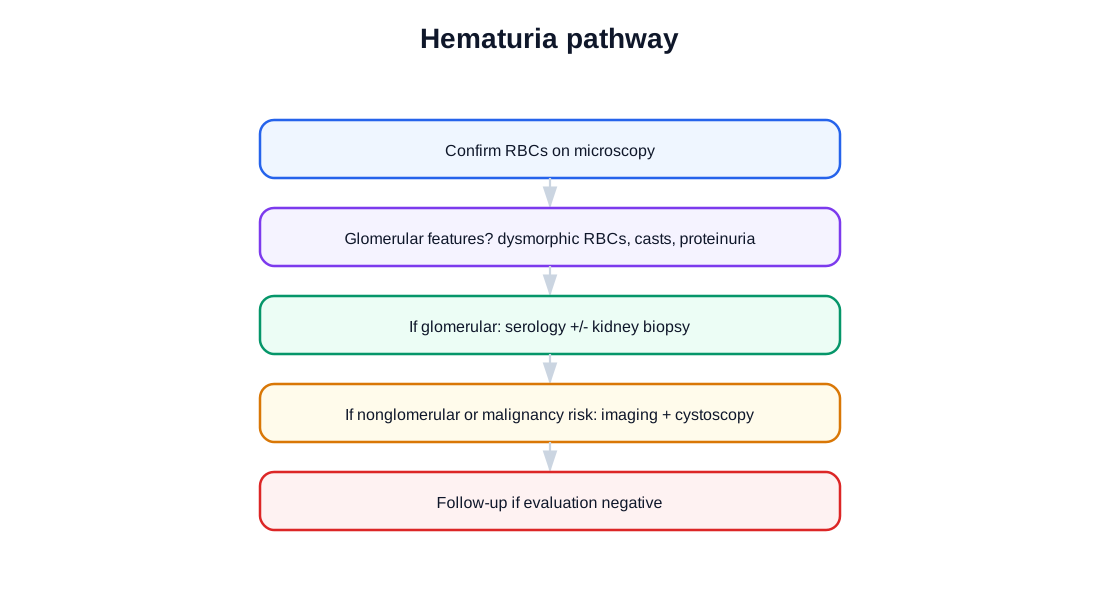
Practical orientation: First confirm true hematuria on microscopy, then separate glomerular from urological bleeding and screen for malignancy risk where appropriate.
Use first: clinical summary and algorithm.
Then: differential diagnosis, workup and management tables.
Escalate: use red flags and biopsy/urgent-care sections.
Clinical summary
Definition
At least 3 RBC/HPF on a properly collected specimen. Avoid testing during menstruation.
Dipstick blood without RBCs
Think myoglobinuria, hemoglobinuria or semen contamination rather than true hematuria.
Glomerular clues
Dysmorphic RBCs, acanthocytes, RBC casts, proteinuria, reduced eGFR.
Urologic clues
Clots, bright red urine, irritative voiding symptoms, malignancy risk factors.
Key decision
Decide glomerular vs nonglomerular source and investigate accordingly.
Algorithm
Causes
| Origin | Common causes |
|---|---|
| Glomerular | IgAN/IgAV, thin basement membrane disease, Alport syndrome, anticoagulant-related nephropathy, TMA and other glomerular diseases. |
| Nonglomerular renal | Interstitial nephritis, papillary necrosis, pyelonephritis, BKV infection, cystic disease, renal mass, hypercalciuria or hyperuricosuria. |
| Urinary tract | Stones, trauma, prostatitis, BPH, cystitis, urethritis, malignancy. |
| Vascular | Renal artery thromboembolism, renal vein thrombosis, renal AVM. |
History clues
| Finding | Consider |
|---|---|
| AKI | RPGN, RBC cast nephropathy, obstruction from clots. |
| Blood clots | Nonglomerular bleeding. |
| Recent upper respiratory infection | IgA nephropathy or postinfectious GN. |
| Hearing loss, retinopathy, lenticonus | Alport syndrome. |
| Flank pain | Stone, renal infarction, pyelonephritis or nutcracker syndrome. |
| Irritative voiding symptoms | Cystitis or bladder cancer. |
| Cyclic hematuria with menstruation | Urinary tract endometriosis. |
| Travel/residence in Africa or Middle East | Schistosoma haematobium cystitis. |
Workup
| Step | Practical approach |
|---|---|
| Confirm | Repeat microscopy on a properly collected specimen. |
| Sediment | RBC casts or dysmorphic RBCs suggest glomerular source. |
| Protein | Proteinuria >0.5 g/day supports glomerular source; hematuria alone does not cause major proteinuria. |
| Culture | Treat UTI and repeat urinalysis after resolution. |
| Imaging | Renal ultrasound; CT stone protocol if stone likely. |
| Urologic evaluation | CT urography and cystoscopy when malignancy risk factors exist or no clear benign cause. |
Gross hematuria timing
| Timing | Possible site |
|---|---|
| Beginning of stream | Urethra. |
| End of stream | Prostate or trigone. |
| Throughout stream | Bladder, ureter or kidney. |
Special syndromes
| Syndrome | Key points |
|---|---|
| Exercise-induced hematuria | Occurs after strenuous exercise and should resolve within 1 week of rest. Persistent hematuria requires evaluation. |
| Nutcracker syndrome | Left renal vein compression between SMA and aorta; hematuria with or without left flank pain. |
| Loin pain hematuria syndrome | Recurrent flank pain with microscopic or gross hematuria, often normal renal function. |
| Renal AVM/AVF | Hematuria, renal colic, hypertension, high-output heart failure in large lesions; diagnose with Doppler/angiography. |