Renal Genetics
Renal Genetics - When to suspect genetic kidney disease and how to select and interpret genetic testing.
Practical orientation: Genetic testing is most useful when phenotype, age of onset, family history or extrarenal features suggest a monogenic cause.
Use first: clinical summary and algorithm.
Then: differential diagnosis, workup and management tables.
Escalate: use red flags and biopsy/urgent-care sections.
Clinical summary
When to suspect
Early onset, family history, extrarenal features, congenital anomalies, unexplained CKD or atypical presentation.
Testing options
Single gene, panel, MLPA/CMA, WES or WGS depending on phenotype and question.
Before testing
Informed consent and genetic counseling are essential.
Results
Interpret with phenotype, inheritance and variant classification.
Value
Diagnosis, management, prognosis and family counseling.
Algorithm
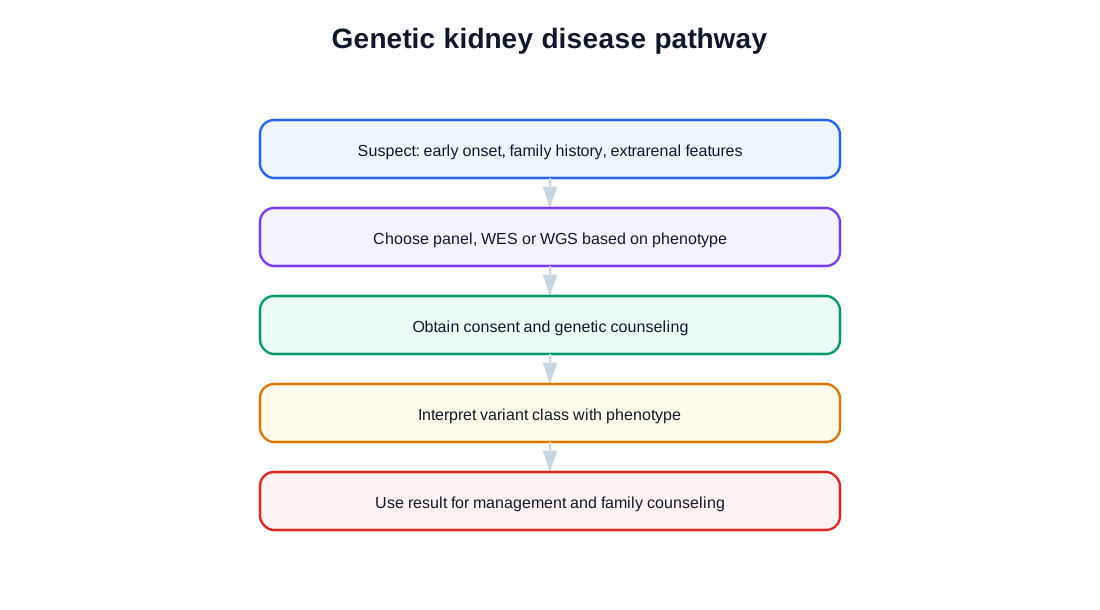
Clues to genetic kidney disease
- Early-onset kidney disease or congenital anomalies.
- Positive family history, but absence of family history does not exclude genetic disease.
- Extrarenal manifestations: hearing loss, eye disease, developmental delay, facial dysmorphism, diabetes, gout, neurologic disease.
- Kidney disease without clear environmental/systemic cause.
- Unexplained CKD, especially with cystic disease, tubulopathy or syndromic features.
Testing modalities
| Test | Best use |
|---|---|
| Biochemical tests | Metabolic renal diseases. |
| Karyotype | Large chromosomal abnormalities. |
| CMA | Copy-number changes such as deletions/duplications. |
| MLPA | Smaller deletions/duplications in targeted genes. |
| Sanger sequencing | Single gene or variant confirmation. |
| Gene panel / NGS | Most phenotype-driven kidney genetic testing. |
| WES | Broad evaluation of coding variants when phenotype is less clear. |
| WGS | Coding and noncoding variants; better for structural/genomic rearrangements. |
Variant interpretation
| Term | Meaning |
|---|---|
| Pathogenic | Variant is considered disease-causing. |
| Likely pathogenic | Strong evidence but not definitive. |
| VUS | Evidence insufficient; do not over-interpret. |
| Likely benign / benign | Not expected to cause the disease. |
Renal genetic disease groups
| Group | Extrarenal clues | Genes / inheritance examples |
|---|---|---|
| Polycystic kidney disease | Liver cysts, aneurysms. | PKD1, PKD2, PKHD1; AD/AR. |
| ADTKD | Gout, anemia, MODY5 diabetes. | UMOD, REN, MUC1, HNF1B; AD. |
| Ciliopathies | Retinitis pigmentosa, polydactyly, obesity, hypogonadism. | NPHP, BBS genes; often AR. |
| CAKUT | Diabetes, deafness, eye anomalies. | PAX2, HNF1B, EYA1, SALL1 and others. |
| Hereditary nephrotic syndrome | Bone, immune, neurologic or cardiac involvement. | WT1, TRPC6, NPHS1/2, COQ2. |
| Alport syndrome | Hearing loss, anterior lenticonus. | COL4A3-6; AD/AR/X-linked. |
| Tubulopathies | Short stature, eye/skeletal abnormalities. | CLCN5, OCRL, SLC12A1, SLC12A3. |
Benefits and risks
| Benefit | Risk / limitation |
|---|---|
| Ends diagnostic odyssey and avoids unnecessary tests. | VUS and uncertain findings can increase anxiety. |
| Guides surveillance and therapy. | Incidental findings may require long-term monitoring. |
| Identifies at-risk relatives. | Insurance/employment implications vary by jurisdiction. |
| Supports transplant donor evaluation. | Genetic result must fit phenotype and inheritance. |