Renal Biopsy
Renal Biopsy - Indications, contraindications, preparation, complications and post-biopsy monitoring.
Practical orientation: A biopsy is most useful when the result will change diagnosis, treatment intensity or prognosis.
Use first: clinical summary and algorithm.
Then: differential diagnosis, workup and management tables.
Escalate: use red flags and biopsy/urgent-care sections.
Clinical summary
Main indications
RPGN, significant proteinuria, unexplained renal impairment, active sediment and suspected systemic/paraprotein disease.
Absolute contraindications
Uncooperative patient, uncontrolled severe HTN or uncorrectable bleeding diathesis.
High-risk patients
AKI, anemia, high creatinine, hypertension, anticoagulation, liver disease or urgent biopsy.
Main complication
Bleeding: hematuria, hematoma, transfusion, angiographic intervention.
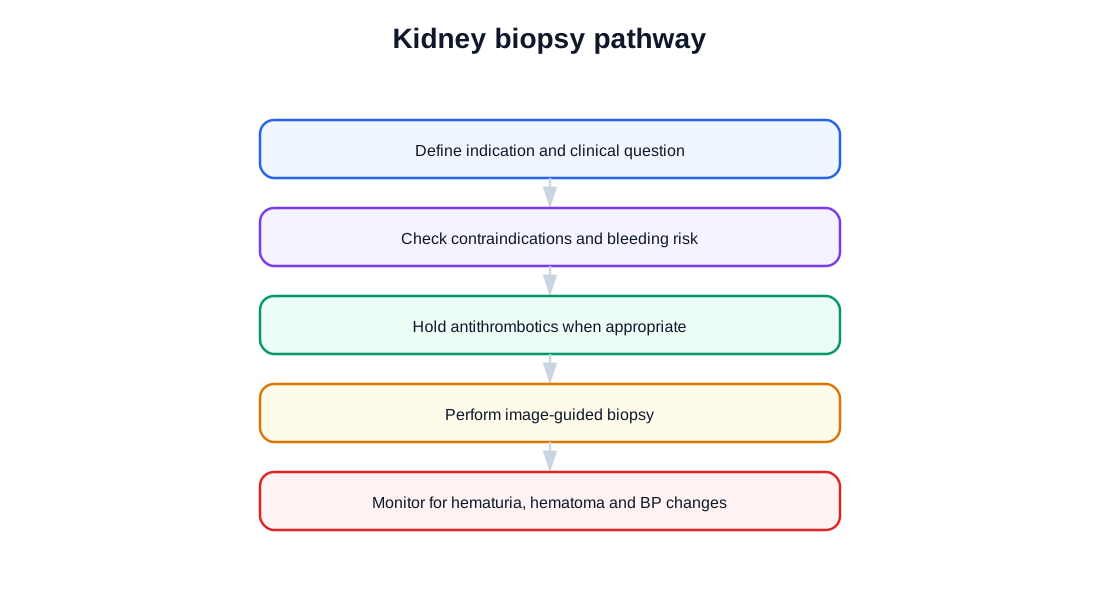
Algorithm
Indications
| Indication | Reason |
|---|---|
| RPGN | Diagnosis and urgent treatment selection. |
| Proteinuria >1 g/day or nephrotic syndrome | Establish lesion and chronicity. |
| Unexplained renal impairment | Diagnose potentially treatable disease. |
| Hematuria with proteinuria | Distinguish GN patterns. |
| Suspected paraprotein disease | Identify MGRS lesion and guide hematology therapy. |
Contraindications
| Type | Examples |
|---|---|
| Absolute | Cannot cooperate, uncontrolled severe HTN, uncorrectable bleeding diathesis. |
| Relative | Recent antiplatelet/anticoagulant therapy, Hb <8, platelets <100, INR >1.5, cirrhosis, small echogenic kidneys, hydronephrosis, infection, pregnancy late gestation, solitary kidney or multiple cysts. |
Preparation
- Define the clinical question before biopsy.
- Check CBC, PT/INR, aPTT, type/screen; factor X if AL amyloid suspected.
- Control BP, ideally <140/90 when possible.
- Hold antiplatelets/anticoagulants based on risk and indication.
- Consider DDAVP in selected high bleeding-risk uremic patients.
Biopsy approaches
| Approach | When used |
|---|---|
| Ultrasound-guided percutaneous | Standard approach. |
| CT-guided | When kidney position or body habitus limits ultrasound approach. |
| Transjugular | Bleeding risk, mechanical ventilation, or combined liver/kidney biopsy need. |
| Laparoscopic/open | Failed percutaneous biopsy, inability to stop anticoagulation, complex anatomy or special circumstances. |
Post-biopsy monitoring
| Monitoring | Practical approach |
|---|---|
| Bed rest | Often several hours; avoid heavy lifting/exercise for about 1 week. |
| Vitals | Frequent BP and pulse checks early after biopsy. |
| Urine | Check for gross hematuria and clots. |
| CBC | Check after procedure and next day if inpatient/high risk. |
| Escalation | Persistent gross hematuria, hemodynamic compromise or transfusion need -> CT angiogram and possible embolization. |